
Practice Your Discomfort
By Paul Bird and Jeff Williamson
Far too many people only hit the range when the weather is perfect—sunny skies, mild temperatures, and no football game to miss. In Mississippi, that might give you three or four good days a year. But if the only time you train is under ideal conditions, you’re building skills for a world that doesn’t exist. Real-life encounters rarely happen when everything lines up perfectly.
Sure, shooting from your favorite stance, with your preferred grip, at a known distance is important. If you’ve mastered that, you’re already ahead of most people who carry. But that should be your baseline, not the pinnacle of your training. True preparation means pushing beyond comfort.
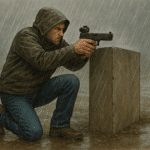
Go to the range when it’s cold. Experience what it’s like when your fingers are stiff, when your optic fogs in the temperature change from concealed to cold air, and the trigger feels unfamiliar because you can barely feel it. Go when it’s hot. Sweat stinging your eyes and a slick grip will show you quickly how much harder it is to maintain accuracy under stress. Change your shooting positions. Try kneeling, moving laterally, or shooting from behind cover. Have someone else load dummy rounds in your magazines so you practice dealing with a misfire. Practice with your off-hand. Add timed drills to simulate pressure. Consider wearing what you’d actually be wearing in public. For example, if you are a member of a church security team, wear what you will be wearing during church security duty—your Sunday clothes—to learn how that affects your draw speed and movement.
The goal is to condition both body and mind. When you practice discomfort, you teach yourself to stay calm, problem-solve, and stay accurate when things are far from perfect—because that’s exactly what reality demands.
Then, before you leave the range, shoot some drills that will rebuild your confidence. Don’t leave the range feeling defeated. For example, when your drills have chipped away at your confidence, shoot some drills that require slow, methodical, accurate fire, perhaps head shots at 10 or 15 yards, before you end your practice for the day. Leave the range with a feeling of confidence and accomplishment before returning to the “real world.”
