
Church Security Training: More Than a Legal Requirement
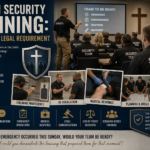
Mississippi Code §49-9-171 provides a legal framework for church security teams and grants certain immunity protections to team members who are acting within the scope of their duties and in accordance with the law. Those protections are important, but they do not replace the need for proper training, sound policies, and regular practice.
Under Mississippi Code §49-9-171, a church security team member must meet specific requirements to receive the immunity protections provided by the law. The member must possess an Enhanced Concealed Carry Permit issued by the Department of Public Safety and must be identified in the official records or documents of the church as a member of the security team. This documentation may take the form of a team roster maintained by church leadership or inclusion in the minutes of a leadership meeting that records the individual’s membership on the team.
How does your church security team train?
Many teams meet faithfully each week but spend little time developing the skills needed to respond to medical emergencies, disruptive individuals, suspicious activity, or other critical incidents. A church security ministry should train for far more than active shooter scenarios. Effective training should include firearms proficiency, de-escalation techniques, observation skills, communications, emergency operations procedures, medical response, legal considerations, use-of-force decision-making, and scenario-based exercises.
Who trains your team?
Not all training is equal. While experienced law enforcement officers, security professionals, and certified instructors can provide valuable expertise, churches should ensure that training is relevant to the unique environment of a place of worship. Church security personnel are not police officers. Their mission is to help provide a safe and welcoming environment while protecting the congregation.
Individuals with backgrounds in law enforcement, the military, firearms instruction, mental health, counseling, healthcare, legal practice, martial arts, ministry, and church leadership can all offer valuable perspectives and skills that support church security team members in their duties. However, it is equally important that trainers understand the unique culture and operation of the local church. Most church security teams are comprised entirely of volunteers, and understanding how to work with, develop, and motivate volunteers is essential to a successful program.
Training should be ongoing rather than a one-time event. Skills deteriorate without practice, and laws, threats, and best practices evolve over time. Regular drills, tabletop exercises, scenario-based training, and refresher courses help ensure that team members can perform effectively when called upon.
The immunity provided by Mississippi law is a significant benefit, but it assumes that team members are acting reasonably and within their assigned responsibilities. The best way to protect both your congregation and your team is through consistent, documented, and professional training.
So, ask yourself: If an emergency occurred this Sunday, would your team be ready? And could you demonstrate the training that prepared them for that moment?
