
BOLO Notices and Church Security: Intelligence, Not Gossip
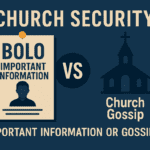
I once heard a young church security team leader say, “I don’t like gossip.” My response was simple: relevant, timely information isn’t gossip—it’s intelligence.
A BOLO (Be On the Lookout) notice may be one of the most valuable tools a church safety team has when preparing for a potential near-term issue. When used correctly, it helps teams move from being reactive to being appropriately prepared. But how that information is handled matters just as much as the information itself.
BOLO notices should be distributed only to those with a legitimate need to know, typically trained members of your church safety or security team. This information should be treated as close-hold, meaning it is not shared outside the team, not discussed casually, and not passed along to friends or family. The purpose is awareness and preparedness, not curiosity or conversation.
A BOLO should always be based on specific, articulable concerns rather than general impressions. Appropriate reasons to issue a BOLO include a known individual who has made credible threats, someone who has previously been trespassed from church property, or a person exhibiting concerning and documented behavior patterns, such as stalking or an inappropriate focus on vulnerable groups. Caution is essential when deciding what rises to the level of a BOLO. Statements like “he’s crazy” or vague references to personal struggles are not sufficient. Likewise, personal matters such as marital conflict should only be included when there is documented threatening behavior tied directly to a safety concern.
A well-constructed BOLO provides a clear description of the individual, ideally supported by photographs when available, along with the specific reason the person is the subject of concern. It should explain the nature of the conflict or behavior and, just as importantly, give clear direction on how the team should respond if the individual appears. Whether the instruction is to observe and report, engage the individual outside the building, or establish firm behavioral boundaries, clarity in advance prevents hesitation in the moment.
There is value in churches communicating with one another, but this must be handled carefully and responsibly. Appropriate sharing includes confirmed incidents such as removals or trespass actions, documented disruptive or threatening behavior, and coordination during active or recent concerns. The key is to share facts rather than opinions, avoid speculation or labels, and when possible, coordinate with local law enforcement or a trusted church network. Communication should always be secure and intentional, not informal or conversational.
BOLOs are not about spreading information—they are about reducing risk. Used properly, they increase awareness, improve response readiness, and help teams remain calm and intentional. Used poorly, they can damage trust, create unnecessary fear, and introduce legal and ethical concerns.
