
The Growing Need for Self-Sufficiency:
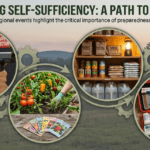
In just the last few weeks, we have witnessed alarming events – the terrifying reality of Mexican cartel warfare encroaching on our borders, escalating tensions with Iran in the Middle East, and debilitating cyber-attacks. These aren’t just sensational news stories; they are stark reminders of the fragility of the systems we often take for granted. This new reality demands a significant shift in our perspective, emphasizing the critical need to cultivate a culture of self-sufficiency for ourselves and our families.
Our reliance on a vast, interconnected network for our food, water, and even security is no longer as robust as it once seemed. Supply chains, as we saw during recent global disruptions, are easily fractured. A cyber attack that targets our utility grid could plunge our community into chaos, disrupting everything from fresh water supply to communications. The instability spilling across our borders or erupting in distant parts of the globe impacts global markets and can create localized instability in surprising ways.
This isn’t an argument for retreating into isolation, but rather an urgent call for empowerment and proactive preparation. Self-sufficiency is about building resilience – a buffer against the unexpected, and a means to secure our future in an increasingly volatile environment.
Here are some key areas where developing self-sufficiency is becoming more than just a hobby, but a vital life skill:
Firearm Safety and Training
In an increasingly uncertain world, ensuring personal and family safety has become a paramount concern. Understanding firearm safety and obtaining proper training is a fundamental aspect of responsible self-reliance. It’s not about paranoia; it’s about being prepared and taking ownership of your own security.
Why it Matters:
• Personal Safety: While we hope to never face a direct threat, understanding how to responsibly handle and use a firearm can provide a crucial layer of personal defense when all other options have failed.
• Responsible Ownership: If you choose to own a firearm, comprehensive training is essential. It ensures you understand safety protocols, proper storage, situational awareness, and the legal and ethical implications of using force.
• Confidence and Competence: Proper training instills confidence and competence. It teaches respect for the power of firearms and emphasizes avoidance and de-escalation as primary goals.
• Community Safety: Trained and responsible firearm owners contribute to the overall safety of their community by being prepared and understanding the importance of safe practices.
Prepping for long term disruptions
“Prepping” often conjures up images of underground bunkers and extreme survivalism, but the reality is far more practical. It’s about being prepared for common and likely disruptions. Whether it’s a major weather event (a constant reality in Mississippi), a prolonged power outage, a supply chain breakdown, or a cyber attack that takes out key infrastructure, having essential supplies on hand is common sense.
Key Prepping Elements:
• Water Purification: The single most important element for survival. Stockpiling bottled water is a good start, but investing in robust filtration systems (like gravity filters or straw filters) and learning water purification techniques (boiling, chemical treatment) is crucial.
• Food Storage: Focus on non-perishable food items that are easy to store and prepare. Canned goods, dried food (beans, rice, pasta), and dehydrated or freeze-dried meals are all good options. Aim for a multi-week supply to start.
• First-Aid and Medications: A comprehensive first-aid kit is essential. Stock up on essential medications, and over-the-counter (pain relievers, allergy meds, antibiotics, bandages).
• Power & Lighting: In a power outage, flashlights, headlamps, and lanterns are essential. Have a significant supply of batteries or invest in solar-powered chargers and backup power stations (like portable power generators or solar generators).
• Communication: Communication can break down quickly in a crisis. Have a hand-crank or solar-powered radio (for NOAA alerts) and consider alternative communication methods like satellite messengers or walkie-talkies.
Sustenance: Cultivating Food and Basic Skills
True self-sufficiency means moving beyond relying solely on stored supplies. It involves developing the skills to produce and acquire food, and being able to maintain essential systems.
Growing Your Own Food:
• Home Gardening: Starting a small vegetable garden is an incredibly rewarding and practical skill. Focus on easy-to-grow vegetables like tomatoes, peppers, beans, and squash. Learn about composting, soil health, and pest control.
• Container Gardening: If you don’t have a large yard, container gardening on a patio or balcony is a viable option for herbs and smaller vegetables.
• Seed Saving: Learn how to save seeds from your harvest so you can replant your garden year after year, reducing reliance on buying new seeds.
Basic Skills & Sustainability:
• Food Preservation: Learn techniques like canning, dehydrating, and pickling to preserve your harvest and extend your food supply.
• Home Maintenance: Develop basic home repair and maintenance skills. Understanding how to handle plumbing issues, electrical problems, and basic carpentry can save resources and make your home more resilient.
• First Aid/Medical Training: Beyond having a first-aid kit, take a comprehensive first-aid and CPR/AED course. Knowing how to stabilize a patient can be life-saving in an emergency.
• Community Building: While self-sufficiency focuses on individual resilience, building strong relationships with neighbors is just as important. Knowing and trusting your neighbors can create a critical support network in times of crisis.
Conclusion
The world is becoming an increasingly complex and unpredictable place. While we can’t control global events or prevent all disruptions, we can control how we prepare for them. Embracing self-sufficiency – through responsible firearm training, practical prepping, and the development of sustenance skills – is not an act of fear, but an act of proactive empowerment. It’s about building a foundation of resilience for ourselves and our families, ensuring that we can navigate uncertainty with confidence and maintain a sense of stability, regardless of what the headlines bring.
